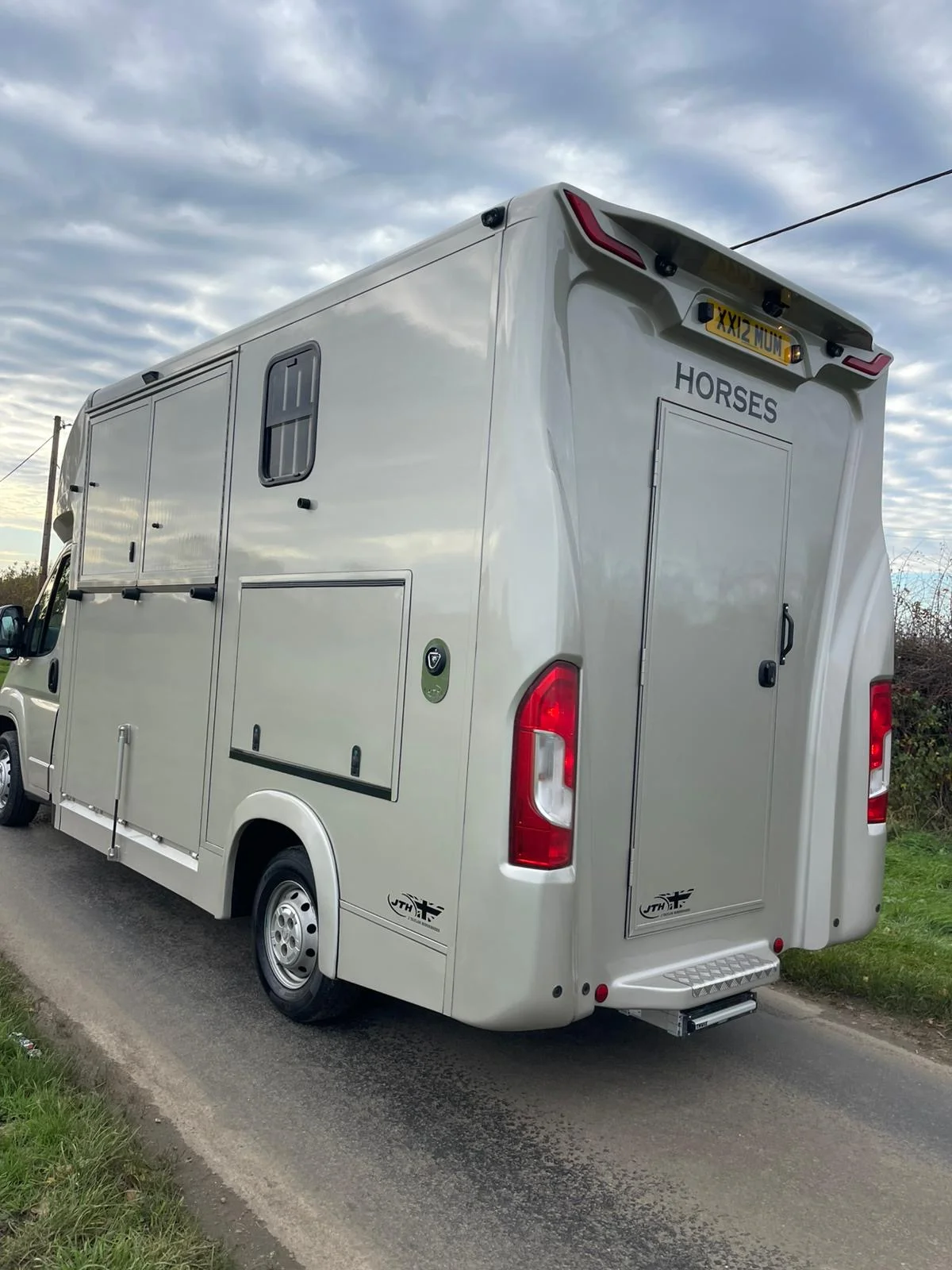
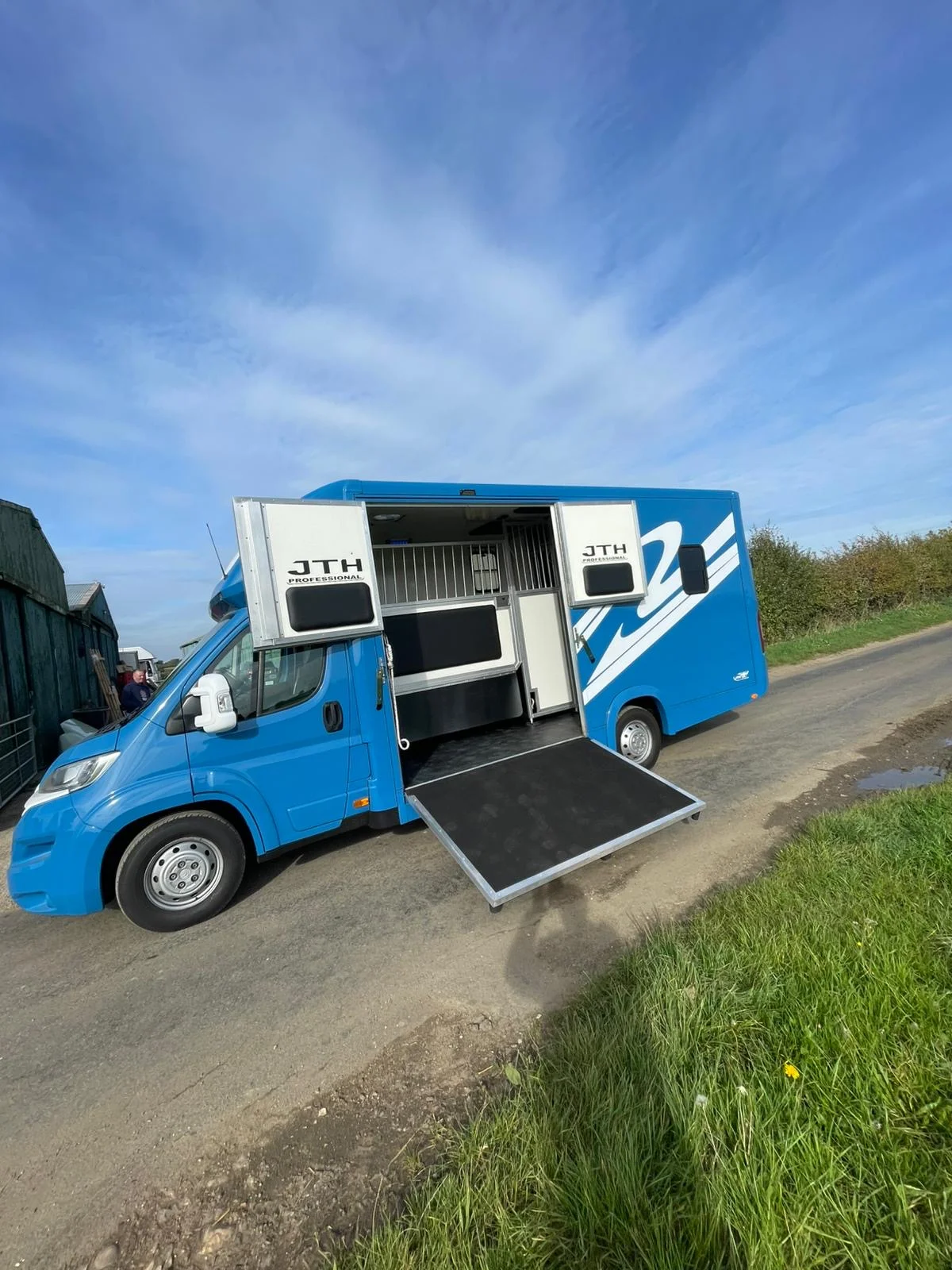
JTH Horsebox

3.5 Tonne Horseboxes

Driven on a standard car licence, whenever you passed your test. Built by hand in Norfolk, and plain about how much they can carry.

What a 3.5 tonne horsebox is, and what it isn't

A 3.5 tonne horsebox is one whose maximum authorised mass, the box with the horses and everything else in it, is 3,500kg. In the UK it can be driven on a standard car licence (category B), whenever you passed your test.

The limit is the catch. Once a body is built on the chassis, what is left for horses, people, water and kit is the payload, and on our 3.5 tonne horseboxes that is 1,000kg to 1,100kg, with minimal left on the Progeny 35. That carries one horse and a day's kit, or two ponies. It does not carry two full-size horses, living and a family, whoever built the box.

So we publish the payload and the safety equipment of every model below, and the arithmetic to check them against your own horse. If the sums don't work, a 4.5 tonne horsebox carries 1,400kg to 1,800kg.

Maximum authorised mass
3,500kg
Licence
Category B
A standard car licence, whenever you passed
Payload, our 3.5 tonne range
1,000kg to 1,100kg
Minimal on the Progeny 35
From
£19,500
body build only · exc. VAT

Our 3.5 tonne horseboxes

Three models, each built to order. Payload and safety equipment are as each model's own page states them. The crew-cab Progeny 35 leaves minimal payload at 3.5 tonnes; for horses and a full crew we recommend the Progeny 45.

Professional 35

From£22,000

body build only · exc. VAT

Payload
Minimum 1 tonne
Overall length
6.32m
Licence
Category B (car licence)

Safety equipment

  • Triple reinforced bulkhead
  • Full height gapless, stepless & lightweight ramp
  • Composite floor
  • Escape doors
  • Stallion partition available

Principle 35

From£19,500

body build only · exc. VAT

Payload
1.1 tonnes on average
Overall length
6.32m
Licence
Category B (car licence)

Safety equipment

  • Triple reinforced bulkhead
  • Gapless, stepless & lightweight ramp with barn doors
  • Aluminium floor
  • Secondary aluminium bulkhead with full size twin escape doors
  • Stallion stall built as standard

Progeny 35

From£25,500

body build only · exc. VAT

Payload
Minimal
Overall length
7.0m

At 3.5 tonnes the crew cab leaves minimal payload. The Progeny 35 can be built, but for horses and a full crew we recommend the Progeny 45.

Safety equipment

  • Advanced CCTV system
  • Emergency exit doors
  • Premium anti-slip flooring
  • LED lighting throughout
  • Reinforced construction
  • GPS tracking system

Will a 3.5 tonne horsebox carry your horse?

Payload is the plated weight less the weight of the empty box. It has to cover everything you load: the horse, every person on board, water, tack, feed, hay and gas.

Brochure payloads are often for a bare box. Living, a second partition, an extra locker and a bigger water tank all come off it. Ask for the weighbridge weight of a box built to your specification, and weigh your horse rather than guessing. The British Horse Society suggests weighing the empty box with your usual fuel and water on board, then taking that from the plated weight.

Gross weight is not the only limit. Each axle is plated too, and a box can be under its 3,500kg while the rear axle is over, if the load sits behind it. DVSA checks both.

Try your own day out here. Change any figure; nothing is sent anywhere.

Payload as stated on the model's own page.

Horses (kg each)

Use a weighbridge or weigh tape. Most owners guess light.

Count the driver unless the box was weighed with the driver aboard.

A litre weighs a kilo.

Saddles, hay, rugs, buckets, gas.

Your load

Horse
550kg
People
160kg
Water
40kg
Tack, feed and kit
120kg
Total
870kg
Payload
1,000kg

130kg spare

Inside the stated payload with room to spare. Check it on a weighbridge, loaded as you would travel, before you rely on it.

A guide, not a weighbridge. Payload figures are as each model page states them; the box you buy should be weighed as built, and the plate is the limit that counts.

What makes a 3.5 tonne horsebox safe

Lightness is the whole game at 3.5 tonnes, and it is where builders are tempted to save weight in the wrong places. These are the six things to look at on any box you are offered, ours included. Each of our models lists its own safety equipment above.

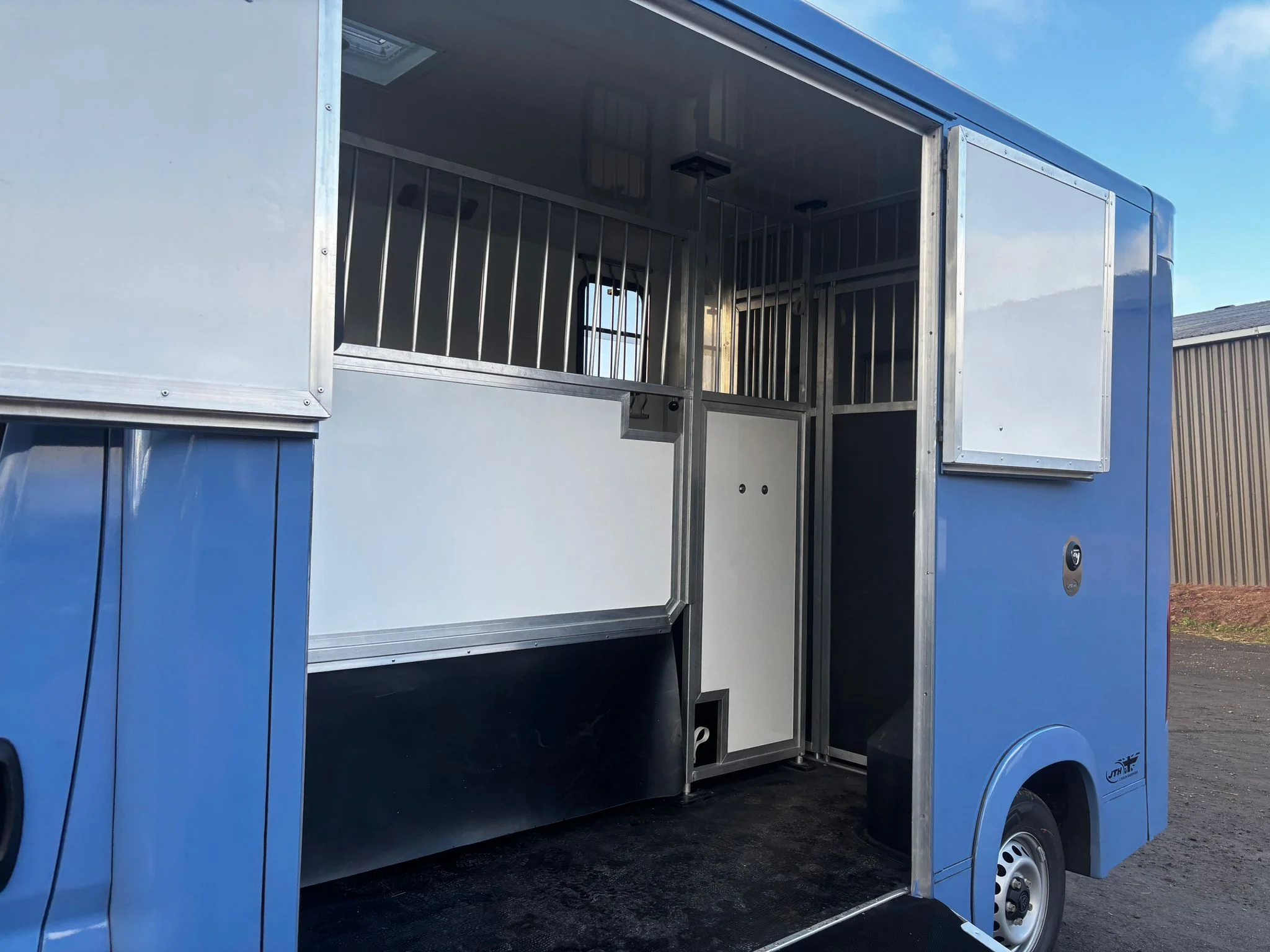
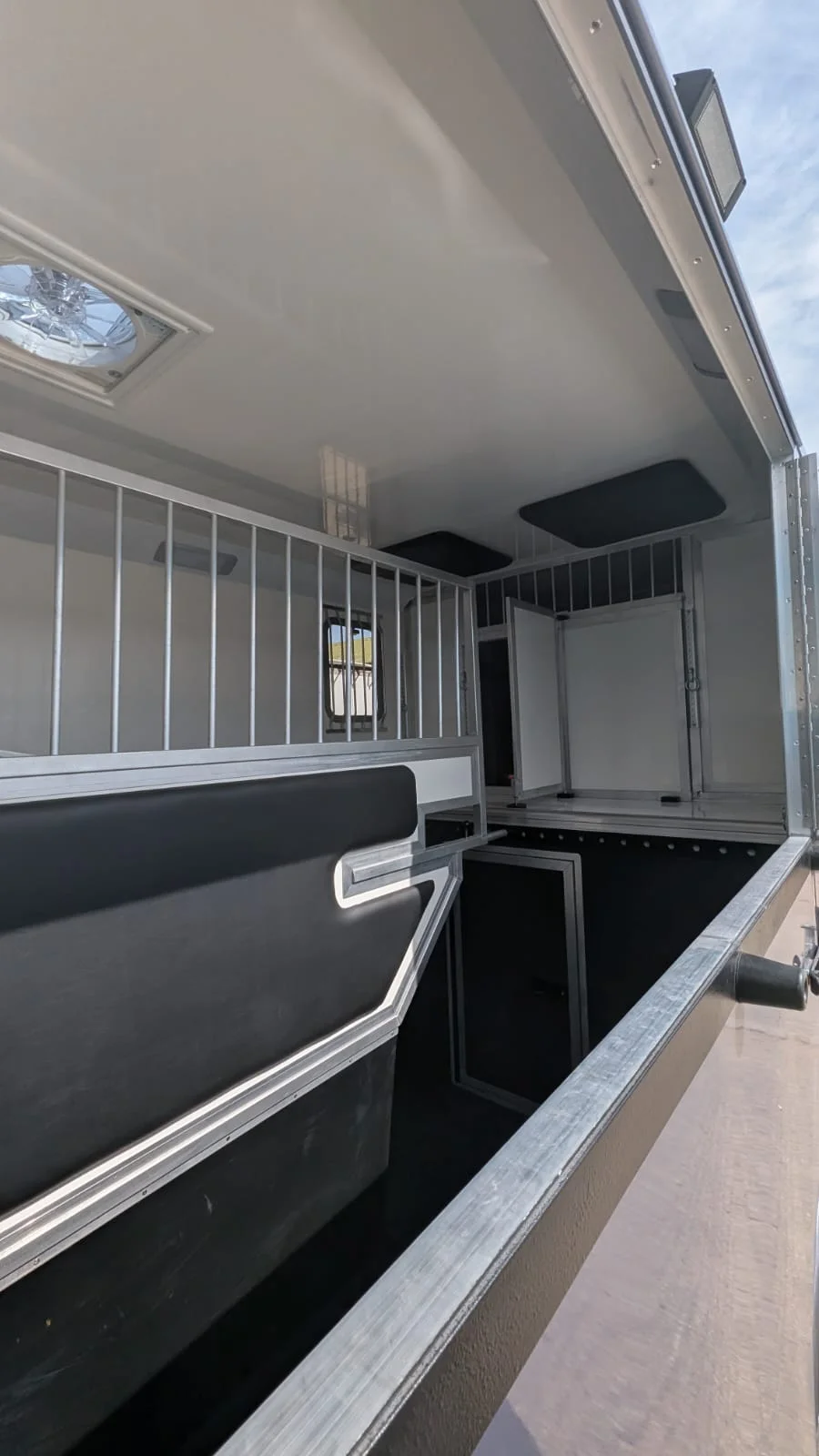
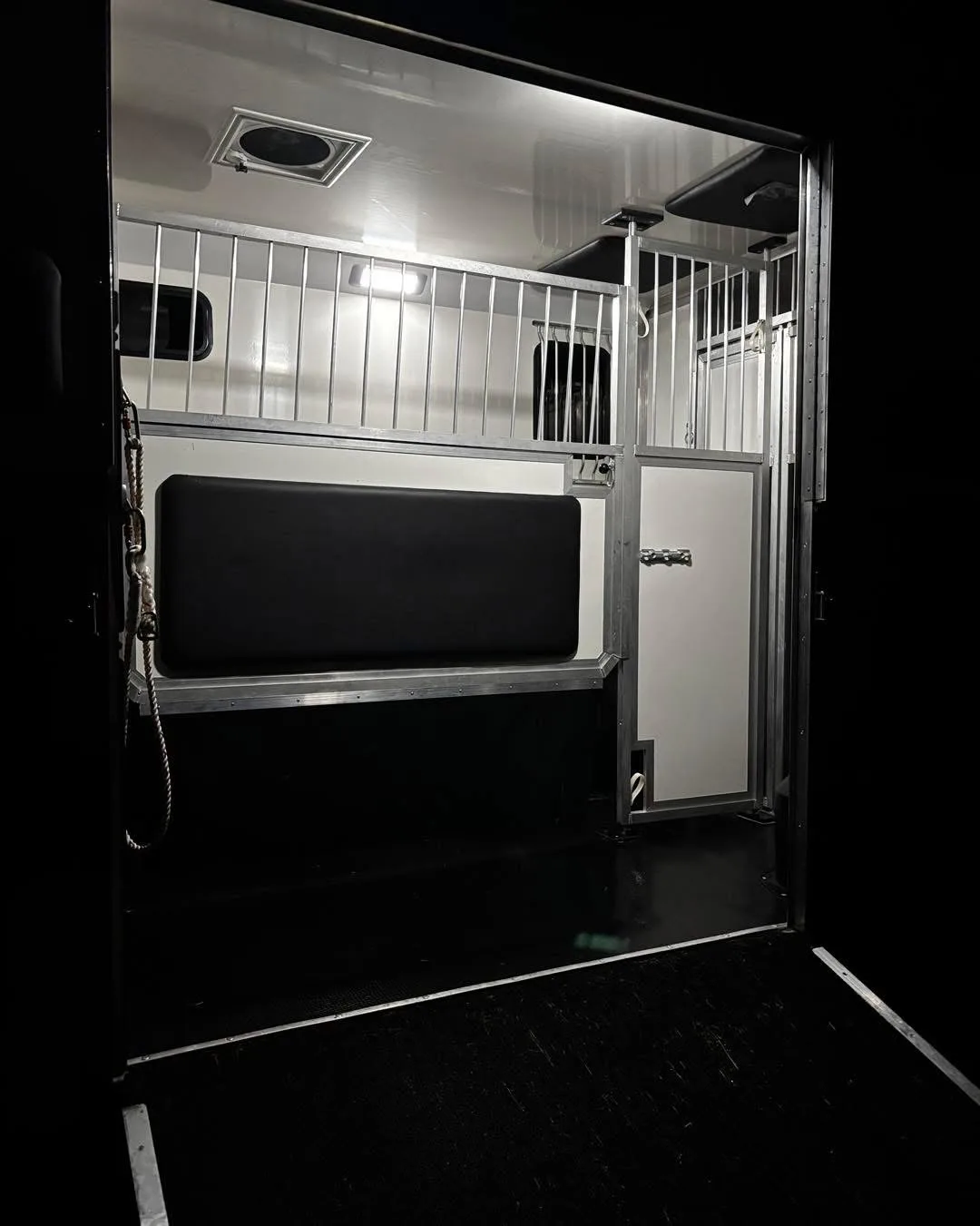
Lit horse area inside a JTH horsebox, with aluminium partition and padded breast bar
  1. 01

    A bulkhead fixed to the chassis

    The wall at the horse’s head takes its weight in an emergency stop. It should be reinforced and tied into the chassis, not only into the body panels.

    Read: Horsebox strength

  2. 02

    A floor that stays dry

    Ask what the floor is made of and how it is sealed where it meets the walls and the ramp. Water getting into a floor is what shortens a horsebox’s life, unseen, under the matting, which is why government guidance tells owners to check under it.

    Read: Ramp and floor grip

  3. 03

    A ramp without a gap or a step

    A gapless ramp with real grip, at a gentle angle, is what gets a reluctant horse on board without a fight. A low load height also keeps the centre of gravity down on the road.

    Read: Load height

  4. 04

    A way out for you

    An escape door from the horse area means nobody has to squeeze past a frightened horse to get out.

  5. 05

    Headroom and moving air

    Heat rises, so a taller horse area is cooler where the horse breathes. Window sizes should be set so air is drawn across the horses on the move, not trapped under the roof.

    Read: Horsebox ventilation

  6. 06

    A known weight

    A weighbridge figure for the box as built, so your payload is a number rather than a hope.

    Read: Horsebox payloads

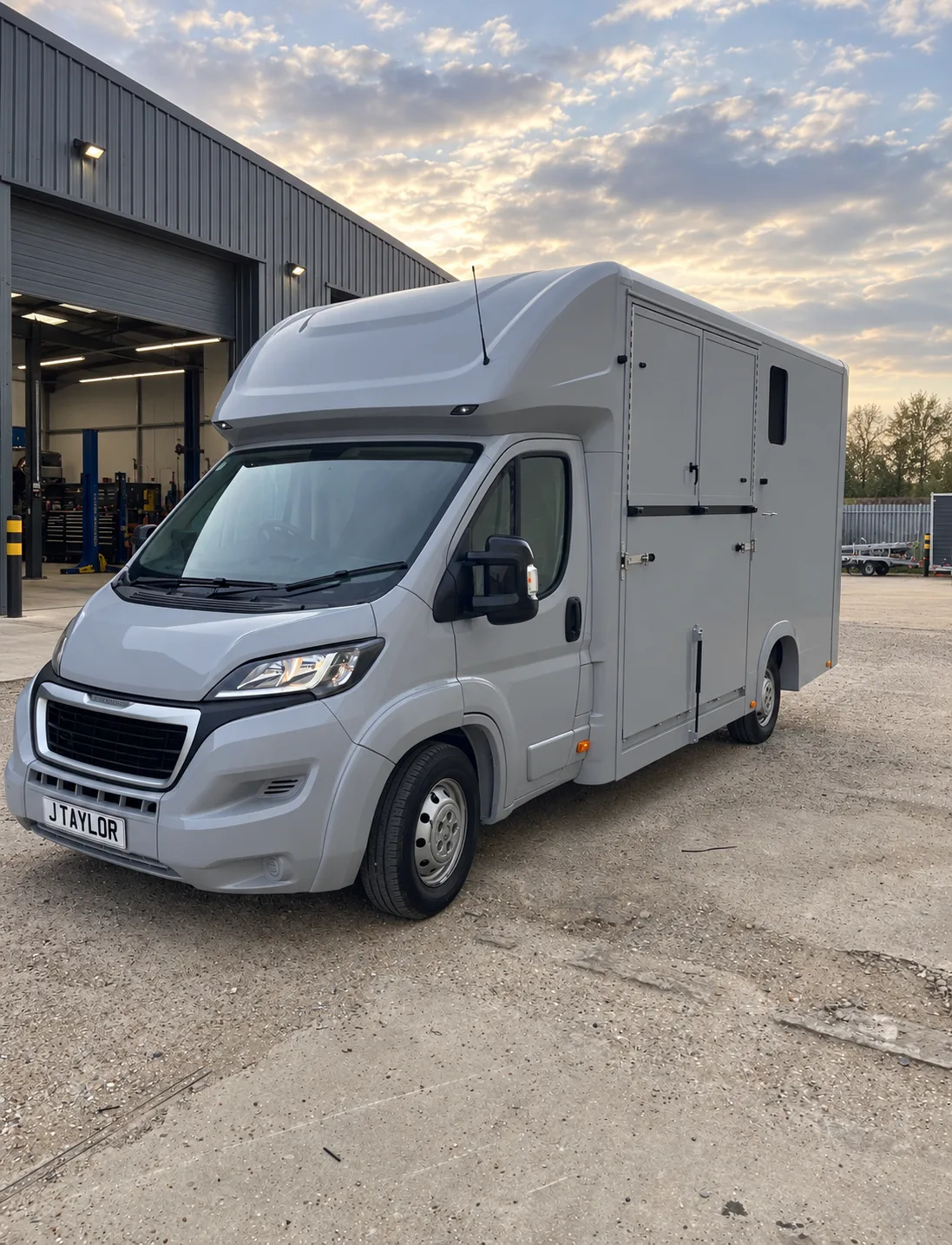
JTH Principle 35 horsebox

Bought from the people who build it

Every JTH horsebox is built by our own team in Norfolk. Come and visit the workshop and see the quality of our builds for yourself, as each horsebox takes shape: the bulkhead, the floor and the joints that a finished box hides.

Kevin Parker, whose designs JTH acquired in 2025, has written at length on horsebox strength, ventilation and ramp grip. Those articles are on this site to read before you talk to anyone, us included.

Built in Norfolk
Every body is built at our workshop in Beeston.
KPH designs
Kevin Parker's proven designs, acquired by JTH in 2025.
Family run
Founded by James Taylor, and still run by the family.
UK & Ireland
Delivered across both, with a representative in Dublin.

3.5 tonne horseboxes: common questions

Can I drive a 3.5 tonne horsebox on a car licence?

Yes. In the UK a 3.5 tonne horsebox can be driven on a standard car licence (category B), whenever you passed your test. The 3,500kg limit is for the loaded box: the vehicle, the horses and everything else on board.

How many horses can a 3.5 tonne horsebox carry?

Payload decides it, not floor space. With around a tonne to spend, most 3.5 tonne horseboxes carry one horse with its kit, or two ponies. Two full-size horses rarely fit inside a 3.5 tonne payload once people, water and tack are counted. If you need to travel two horses, look at a 4.5 tonne horsebox.

What payload should a 3.5 tonne horsebox have?

Enough for your horse, everyone on board, water, tack and feed, with some to spare. Our 3.5 tonne horseboxes carry 1,000kg to 1,100kg, and minimal on the Progeny 35, as stated on each model page. Whoever you buy from, ask for the weighbridge weight of a box built to your specification, not a brochure figure for a bare one: living, partitions, lockers and water all come off payload.

What happens if my horsebox is overweight?

Driving over the plated weight is an offence, and each axle has its own limit too. Under DVSA's enforcement policy, up to 5% over usually earns a verbal warning. Beyond that the horsebox is prohibited from moving until the load is reduced, with a fixed penalty of £100, rising to £300 between 15% and 30% over, and prosecution beyond 30%. On a 3,500kg horsebox, 5% is 175kg. Overloading can also invalidate your insurance, and a heavier box takes longer to stop. Kevin Parker's guide to horsebox payloads explains the terms on a weight plate.

How much does a new 3.5 tonne horsebox cost?

Our 3.5 tonne range starts at £19,500 for the body build, excluding VAT. The base vehicle is sourced separately to your requirements, so the final figure depends on the chassis and the options you choose. Ask us for a quote.

Should I buy a 3.5 tonne or a 4.5 tonne horsebox?

Buy a 3.5 tonne horsebox if you travel one horse, or two ponies, and want to drive on a car licence. Choose 4.5 tonnes if you travel two horses, want living, or carry more people and water. A 4.5 tonne horsebox needs a C1 licence; if you passed your car test before 1 January 1997, your licence will usually include C1 already. Compare our 4.5 tonne horseboxes.

Can a 3.5 tonne horsebox be uprated to 4.5 tonnes?

Yes. We offer uprating to 4.5 tonnes on a suitable chassis, which turns a box that has run short of payload into one with room to spare. Once uprated it is driven on a C1 licence, and the rules for vehicles over 3,500kg apply, as for any 4.5 tonne horsebox. If you might want to uprate later, tell us before we build so the chassis is chosen with it in mind.

Can I see a 3.5 tonne horsebox being built?

Yes. We build our own horseboxes in Norfolk, and you are welcome to visit the workshop and see a build in progress. Call 01603 552109 to arrange a time.

Talk to the people who build it

Tell us what you carry and we'll tell you straight whether a 3.5 tonne box will do it.